




Corporate
Products
Products
Bor-Usa Aluminum LLC
110 E Broward Blvd, Unit 1700
Fort Lauderdale, FL 33301

High-capacity production for US projects.
+1 (786) 742 5386
Email: info@bor-usa.com
BorUsa Aluminum LLC
110 E Broward Blvd, Unit 1700 Fort Lauderdale, FL 33301
Showing all 18 results
Explore BOR USA Aluminum Extrusion Services for custom profile development, extrusion production, and project-specific aluminum channel requirements.
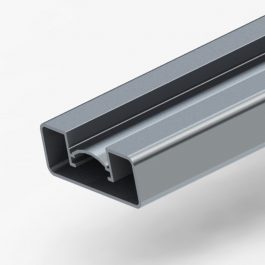
An aluminum extrusion channel is produced by forcing a heated aluminum billet through a shaped die to create a continuous cross-section. Unlike fabricated sheet-metal channels, an extruded channel obtains its geometry directly from the extrusion die, allowing consistent dimensions along the profile length and supporting complex internal or external features.
The extrusion process is particularly useful when a project requires repeated production of the same geometry. The die establishes the fundamental cross-section, while downstream operations can include cutting, drilling, tapping, deburring, machining, anodizing, powder coating, and other value-added processes.
For B2B applications, extrusion should therefore be evaluated as a complete manufacturing process rather than simply as a metal-shaping method. Tooling cost, annual volume, alloy, section complexity, dimensional requirements, finishing requirements, and secondary fabrication all affect the final economics.
“The correct aluminum channel is selected from the complete load path and assembly requirement—not from the profile name alone. Geometry, alloy, wall thickness, span and connection method must be evaluated together.” — BOR USA Engineering Approach
Aluminum U channel is one of the most recognizable channel geometries. It consists of a base connected to two side walls and is commonly used for framing, edge protection, tracks, covers, panel retention, and structural or semi-structural applications.
Aluminum C channel provides a similar open-section configuration but generally uses unequal or differently oriented legs. C-channel geometry can be advantageous when the profile must interface with adjacent components, retain a panel, create a mounting edge, or provide directional structural support.
Other channel configurations include J-channel, hat channel, Z-channel, and application-specific open sections. The appropriate geometry depends on how the profile receives load and how it interfaces with surrounding components.
| Channel Geometry | Typical Function | Common Applications | Primary Design Consideration |
|---|---|---|---|
| U Channel | Support, edge retention, framing | Panels, frames, tracks, guards | Wall thickness and opening width |
| C Channel | Structural and mounting support | Frames, equipment, construction | Leg geometry and bending resistance |
| J Channel | Edge finishing and retention | Cladding, panels, architectural systems | Return geometry and installation clearance |
| Hat Channel | Stiffening and structural reinforcement | Panels, enclosures, building systems | Section depth and moment of inertia |
| Z Channel | Offset support and transitions | Cladding, framing, architectural assemblies | Offset dimensions and connection points |
There is no universal “best” aluminum channel size. The correct dimensions depend on span, load, mounting arrangement, deflection limits, environmental exposure, and available installation space. BOR USA’s channel category identifies common wall thickness options ranging from 1/16 inch to 1/4 inch, while project-specific geometry can require different dimensions.
| Parameter | Typical Consideration | Engineering Relevance |
|---|---|---|
| Wall Thickness | 1/16″ to 1/4″ and project dependent | Influences stiffness, weight and fabrication |
| Channel Width | Application dependent | Determines clearance and component compatibility |
| Channel Depth | Application dependent | Strongly influences bending stiffness |
| Profile Length | Cut-to-project requirement | Influences handling, shipping and assembly |
| Alloy / Temper | 6063-T5, 6061-T6 or project-specific | Determines strength, finishability and machinability |
| Tolerance | Project and profile dependent | Controls fit, assembly and dimensional consistency |
| Surface Finish | Mill finish, anodized or coated | Influences appearance, corrosion resistance and durability |
For architectural and finishing applications, 6063 aluminum extrusion is frequently selected because it combines good extrudability, corrosion resistance and surface finishing characteristics. For applications where higher structural strength is required, 6061-T6 aluminum may be considered, subject to the complete design calculation.
Material selection should never be based solely on tensile strength. Section geometry and the second moment of area can have a greater influence on deflection than simply increasing alloy strength. This is an important distinction when comparing otherwise similar aluminum channel profiles.
Structural aluminum channel applications require more engineering analysis than decorative trim or protective edging. The designer must identify the applied load, support conditions, unsupported span, connection method, expected deflection, environmental exposure, and required service life.
For a simply supported channel subjected to a concentrated load, bending stress and deflection are functions of the load, span, elastic modulus, and section properties. Consequently, increasing channel depth can substantially improve bending stiffness without increasing wall thickness by the same proportion.
For industrial projects, BOR USA can evaluate the profile requirement from engineering drawings rather than forcing the project into an unsuitable standard channel. This approach is particularly relevant for machine frames, equipment housings, industrial guards, transportation components, and custom OEM assemblies.
A common procurement error is to select an alloy first and attempt to compensate for an inefficient cross-section afterward. For many channel applications, geometry determines stiffness, connection behavior, component clearance, and weight distribution before alloy selection becomes the final optimization variable.
| Design Priority | Question | Why It Matters |
|---|---|---|
| 1. Geometry | What load path must the channel support? | Determines section efficiency and interface design |
| 2. Dimensions | What width, depth and wall thickness are required? | Controls stiffness, clearance and mass |
| 3. Alloy / Temper | What strength and finishing characteristics are needed? | Balances mechanical and manufacturing requirements |
| 4. Surface Finish | Is corrosion or appearance a primary requirement? | Determines finishing process and lifecycle performance |
| 5. Secondary Processing | Does the profile require cutting, drilling or tapping? | Affects production cost and assembly readiness |
Aluminum channels for construction are used in framing, cladding, edge protection, glazing interfaces, partitions, trim systems, and modular assemblies. Aluminum offers a low-density alternative to steel where the design does not require the same absolute section strength or fire-performance characteristics.
BOR USA supplies channel-related profiles used in architectural systems, including aluminum facade profiles, glass balcony profiles, and aluminum handrail profiles.
For projects where the channel functions as part of a building envelope, thermal movement, water management, fastener compatibility, galvanic interaction, and surface treatment should be evaluated alongside mechanical requirements.
Aluminum channels for electronics and HVAC-related equipment can provide structural support, component retention, cable routing, enclosure framing, and thermal-management functions. Aluminum’s thermal conductivity can also be useful where the extrusion forms part of a heat-dissipation path.
For integrated lighting systems, BOR USA provides LED aluminum channel profiles designed for linear LED integration and thermal management. For broader electronics and HVAC requirements, the Electronics & HVAC Solutions category provides additional application-specific extrusion options.
Aluminum channels for industrial applications are commonly used where a project requires lightweight structural members, protective sections, modular assemblies, or fabricated components. Typical systems include machine guarding, equipment frames, workstations, conveyors, access structures, control enclosures, and material-handling equipment.
Where a standard channel does not provide the required mounting interfaces, a custom extrusion can integrate slots, ribs, bosses, fastening features, or component-retention geometry directly into the profile.
BOR USA also supplies standard aluminum profiles and aluminum construction profiles for broader structural and modular applications.
Custom aluminum extrusion becomes economically attractive when the same specialized cross-section will be produced repeatedly or when fabrication would require multiple machining and forming operations. The correct comparison is not extrusion tooling cost versus zero tooling; it is total manufactured part cost over the expected production volume.
| Requirement | Standard Channel | Custom Extrusion |
|---|---|---|
| Low-volume prototype | Usually favorable | May require tooling justification |
| Repeated production | Favorable if geometry fits | Often favorable when geometry reduces secondary work |
| Special mounting features | May require machining | Can integrate features into die design |
| Complex cross-section | Limited | Strong advantage |
| Assembly-ready profile | May require additional fabrication | Can integrate cutting and secondary operations |
| Proprietary OEM component | Limited differentiation | Strong advantage |
The economic threshold depends on annual volume, profile weight, die complexity, machining requirements, scrap rate, labor, and logistics. Therefore, an aluminum channel manufacturer USA should be evaluated on total production capability rather than extrusion price alone.
Professional engineering review should therefore begin with the application and load path. A channel that is technically stronger can still be the wrong choice if its geometry creates unnecessary weight, difficult assembly, or incompatible mounting interfaces.
The installation method depends on whether the channel is structural, protective, architectural, or functional. Common attachment methods include mechanical fasteners, brackets, clips, adhesives, rivets, welding, and integrated extrusion connections.
For OEM projects, the engineering process should also account for drawing revision control, tooling ownership, inspection criteria, packaging, production repeatability, and long-term supply requirements.
B2B buyers should compare an aluminum extrusion price per foot or per meter together with alloy, profile weight, tooling, finishing, machining, packaging, freight, minimum order quantity, and production volume. The lowest unit extrusion price does not necessarily produce the lowest total cost of ownership.
| Purchase Scenario | Recommended Approach | Cost Driver | TCO Consideration |
|---|---|---|---|
| Standard framing | Standard channel | Profile weight and quantity | Fast procurement and low tooling cost |
| Architectural finishing | Finished 6063 profile | Surface treatment | Appearance and maintenance |
| Industrial equipment | Structural channel or custom profile | Geometry and fabrication | Assembly efficiency |
| OEM production | Custom extrusion | Tooling and production volume | Reduced secondary machining |
| LED integration | Dedicated LED channel | Profile design and finish | Thermal and installation performance |
| Outdoor infrastructure | Corrosion-resistant finished profile | Alloy and coating | Service life and maintenance |
For accurate aluminum channel supplier USA pricing, the quotation should include the profile drawing or dimensions, alloy and temper, finish, cut length, annual quantity, initial order quantity, required tolerances, and any secondary fabrication. BOR USA can evaluate these variables for project-based B2B procurement.
Request a project quotation through the BOR USA Contact Page when the requirement involves custom geometry, repeat production, or engineering-specific specifications.
| Application | Preferred Profile Approach | Typical Alloy Direction | Priority |
|---|---|---|---|
| Architectural trim | Standard or custom open channel | 6063-T5 | Finish and dimensional fit |
| Industrial framing | Structural channel | 6061-T6 / 6063-T5 | Stiffness and load path |
| Panel retention | U or J channel | 6063-T5 | Clearance and retention |
| Heavy equipment | Reinforced structural profile | 6061-T6 or project-specific | Strength and fatigue |
| LED lighting | Dedicated LED channel | 6063-T5 | Thermal management and finish |
| Outdoor application | Finished corrosion-resistant channel | Application dependent | Environmental durability |
| OEM component | Custom extrusion | Project specific | Integration and production efficiency |
BOR USA approaches aluminum channel manufacturer requirements from both extrusion and application perspectives. The objective is not simply to supply an aluminum section, but to match profile geometry, alloy, finishing, secondary operations, and production requirements to the customer’s actual assembly.
Its broader product portfolio includes aluminum sliding profiles, aluminum floor profiles, aluminum baseboard profiles, kitchen base profiles, and hanger, shelf and LED aluminum profiles.
This product breadth is important for B2B buyers because many projects require more than one extrusion geometry. A supplier capable of supporting related profiles can simplify sourcing, specification control, production coordination, and long-term procurement.
BOR USA supports B2B aluminum extrusion requirements across major U.S. manufacturing and commercial markets, including Florida, Texas, California, New York, Illinois, Georgia, North Carolina, South Carolina, Tennessee, Michigan, Ohio, Pennsylvania, Arizona and other industrial regions.
Typical customers include OEM manufacturers, construction companies, architectural fabricators, equipment manufacturers, lighting companies, industrial automation integrators, transportation suppliers, electronics manufacturers, HVAC companies, and distributors.
For projects requiring an aluminum channel supplier USA with custom extrusion capability, procurement can begin from a technical drawing, existing sample, dimensional specification, or functional description.
The most effective aluminum channel extrusion is not necessarily the thickest or strongest profile. It is the profile that satisfies the required structural, dimensional, environmental, manufacturing, and assembly constraints with the lowest practical lifecycle cost.
For standard applications, an existing aluminum U channel extrusion or aluminum C channel extrusion can reduce tooling requirements and accelerate procurement. For specialized OEM assemblies, custom aluminum extrusion can integrate functional features and reduce secondary fabrication.
The key information gap in many competing pages is the relationship between channel geometry and total project economics. Buyers evaluating aluminum extrusion price should consider tooling, machining, finishing, assembly labor, scrap, freight, maintenance, and expected service life rather than comparing raw profile price alone.
For technical requirements involving structural channels, architectural systems, equipment frames, lighting channels, or OEM components, BOR USA can review the application and recommend a suitable extrusion route. Contact BOR USA for an aluminum channel quotation and technical evaluation.
For a bending-dominated application, increasing section depth can improve the second moment of area substantially without simply increasing material thickness. This means that a well-designed channel can achieve the required stiffness at lower mass than a poorly proportioned, thicker section.
This principle should be evaluated before specifying heavier material. In B2B extrusion projects, geometry optimization can influence raw material consumption, machining time, shipping weight, assembly handling, and lifecycle cost simultaneously.
“For aluminum channel procurement, optimize the cross-section first, then optimize alloy, wall thickness and finishing. The best profile is the one that solves the complete engineering problem with the least unnecessary material and processing.” — BOR USA Technical Perspective
Aluminum channels are used for structural framing, panel retention, edge protection, equipment assemblies, architectural finishing, enclosures, lighting systems, tracks, and industrial support applications.
An aluminum U channel generally has two parallel legs connected by a base, while a C channel typically uses a different leg geometry. The correct choice depends on load direction, mounting interface, clearance, and application requirements.
6063-T5 is commonly selected for architectural and general-purpose extrusion because of its extrudability and finishing characteristics. 6061-T6 may be considered when higher structural strength is required.
Yes. BOR USA supports custom aluminum channels for B2B applications where standard profiles do not meet the required geometry, dimensions, mounting features, or production requirements.
BOR USA identifies common channel wall thicknesses from 1/16 inch through 1/4 inch. Actual dimensions and wall thickness can vary according to profile geometry and project requirements.
Yes, when the channel geometry, alloy, wall thickness, span, connections, loads, and allowable deflection are appropriately engineered. Structural suitability cannot be determined from profile dimensions alone.
Yes. Aluminum extrusion channels can be specified with anodized finishes when the project requires improved surface durability, corrosion resistance, or a consistent architectural appearance.
Aluminum channel price depends on alloy, profile weight, geometry, production volume, tooling, surface finish, cut length, machining, packaging, freight, and other project-specific requirements.
Yes. Dedicated LED aluminum channel profiles can house LED strips while providing mechanical protection, clean installation geometry, and a conductive aluminum path that assists thermal management.
Provide the profile drawing, dimensions or sample, alloy preference, surface finish, required quantity, cut lengths, tolerance requirements, and application details through the BOR USA Contact Page for project evaluation.