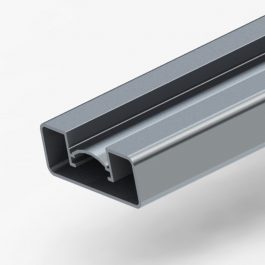
Description
Aluminum facade profiles are precision-engineered extruded components used in building envelopes to create durable, lightweight, and thermally efficient exterior systems. BOR USA as aluminum profiles manufacrurer; facade profiles solve critical challenges such as structural load distribution, thermal insulation, and weather resistance. These systems operate within defined tolerances (±0.1–0.3 mm), load capacities, and thermal expansion limits, making proper engineering selection essential for performance and compliance.
What Are Aluminum Facade Profiles and Where Are They Used?
Aluminum facade profiles are extruded structural elements designed for cladding, curtain wall systems, and architectural envelopes. They are widely used in commercial buildings, industrial facilities, and high-rise projects due to their high strength-to-weight ratio and corrosion resistance.
Core Application Areas
- Curtain wall systems
- Ventilated facade cladding
- Glass facade structures
- Industrial building envelopes
- Modular construction systems
Technical Specifications of Aluminum Facade Profiles
Performance of facade systems depends on material composition, extrusion precision, and surface treatment quality. BOR USA profiles are manufactured according to international standards such as ASTM B221, EN 573, and ISO 9001.
| Parameter | Value / Range | Description |
|---|---|---|
| Alloy Type | 6063-T5 / 6061-T6 | High corrosion resistance and structural strength |
| Density | 2.7 g/cm³ | Lightweight structural advantage |
| Tensile Strength | 160–310 MPa | Load-bearing capacity |
| Thermal Expansion | 23 µm/mK | Expansion under temperature changes |
| Tolerance | ±0.1–0.3 mm | Precision extrusion accuracy |
| Surface Finish | Anodized / Powder Coated | Corrosion and UV resistance |
Engineering Considerations in Facade Profile Selection
Facade systems require precise engineering calculations. Load distribution, wind resistance, and thermal bridging must be evaluated during system design.
Critical Design Factors
- Wind load resistance (EN 1991-1-4)
- Thermal insulation with thermal break systems
- Water tightness and air permeability
- Structural deflection limits (L/175 standard)
Common Mistakes and Professional Tips
- Ignoring thermal expansion leads to facade deformation.
- Incorrect alloy selection reduces durability.
- Poor surface coating causes early corrosion.
- Improper installation tolerances affect sealing performance.
Professional Tip: Always use thermal break profiles in climates with high temperature variation to prevent energy loss and condensation.
Installation and System Engineering Process
Facade installation requires a structured engineering workflow. From design to assembly, each stage directly impacts system longevity and compliance.
Installation Steps
- Project-specific structural analysis
- Profile selection and customization
- Surface treatment (anodizing/powder coating)
- On-site assembly and alignment
- Sealing and insulation application
Improper installation may result in water leakage, thermal bridging, and structural instability.
Aluminum Facade Profiles Pricing Factors
Aluminum facade profile prices vary depending on:
- Alloy type and mechanical properties
- Surface treatment (anodized thickness 10–25 µm)
- Project volume and customization level
- Exchange rate and logistics costs
For accurate project-based pricing, it is recommended to contact BOR USA directly.
Aluminum Facade Profiles Prices
Aluminum facade profile prices vary depending on;
-
Alloy type (6063-T5, 6061-T6)
-
Surface treatment (anodizing, powder coating)
-
Certification scope (ASTM, ISO standards)
-
Project scale and logistics conditions
These factors directly impact pricing and project cost efficiency.
As BOR USA, we provide high structural performance, long service life and project-based competitive pricing for commercial facade systems.
For detailed pricing and technical consultation, you can contact our team.
| Profile Type | Average Price Range / Sample Price | Features and Descriptions |
|---|---|---|
| Standard Profiles | $3.5 – $5.0 / kg | Suitable for general facade applications with basic extrusion and standard tolerances. |
| Thermal Break Profiles | $5.5 – $8.0 / kg | Energy-efficient systems with insulation barriers to reduce thermal transfer. |
| Anodized / Coated Profiles | $6.0 – $9.5 / kg | Enhanced durability with corrosion-resistant coating and UV protection. |
| Custom Engineered Profiles | $8.0 – $12.0 / kg | Project-specific solutions with high precision tolerances and advanced engineering design. |
Conclusion & Evaluation
Aluminum facade profiles are essential components in modern building envelope systems. Compared to competitors, BOR USA focuses on thermal break systems, high precision extrusion, and custom engineering solutions. Keywords such as aluminum facade suppliers USA and custom aluminum facade systems highlight unmet market demand, where BOR USA provides a strong competitive advantage.
FAQ
What is the best alloy for facade aluminum profiles?
The most commonly used alloys are 6063-T5 for architectural applications and 6061-T6 for higher strength requirements.
How do thermal break systems work?
Thermal break profiles use insulating materials between aluminum sections to reduce heat transfer and improve energy efficiency.
What is the typical lifespan of aluminum facade systems?
With proper coating and maintenance, aluminum facade systems can last 30–50 years.
Are aluminum facade profiles recyclable?
Yes, aluminum is 100% recyclable without loss of mechanical properties.